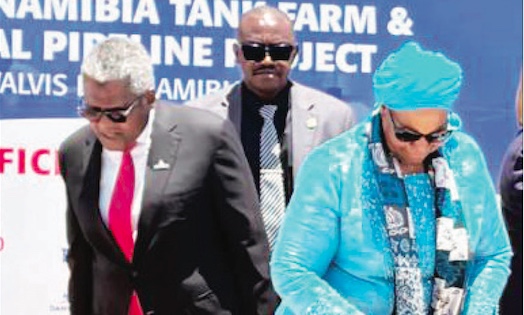
Dangote Industries has officially launched a major petroleum infrastructure project in Walvis Bay, marking a significant step in its strategy to dominate energy logistics across the African continent. The proposed US$2.5 billion investment, valued at approximately N$41 billion, centers on a massive tank farm and an extensive pipeline network designed to streamline the distribution of fuel to Namibia and its landlocked neighbors.
The facility, situated at Farm 58, is intended to reduce the heavy reliance on road transportation for moving petroleum products. By establishing a dedicated pipeline infrastructure, the company aims to lower transportation costs and enhance supply reliability for businesses in sectors such as mining, construction, and logistics. This development positions Namibia as a critical gateway for fuel distribution into the Southern African hinterland.
Regional Connectivity and Storage Capacity
The core of the project involves a tank farm with a total storage capacity of 600 million litres. This figure comprises 360 million litres for diesel and 240 million litres for petrol, occupying approximately 70 hectares of land. To put this scale into perspective, the new facility offers eight times the capacity of Namibia’s current National Oil Storage Facility, which holds roughly 75 million litres.
The proposed pipeline network spans 1,700 kilometres, starting from Walvis Bay and extending towards Otjiwarongo. From there, branches will reach Rundu in Namibia, as well as Ghanzi and Francistown in Botswana. The wider distribution system is designed to serve markets in Zambia, Zimbabwe, Malawi, and the southern Democratic Republic of Congo. This infrastructure is expected to strengthen Walvis Bay’s role as an Atlantic gateway, offering alternative supply routes to countries that currently depend on imported fuel via longer, more expensive land routes.
Economic Impact and Job Creation
Dangote Industries chairman and chief executive Aliko Dangote stated that the investment is driven by a goal to strengthen energy security and make petroleum products more affordable in the region. While the company has not announced specific price reductions or quantified the exact savings per litre, the potential for cost efficiency is tied to reduced transportation expenses and improved supply chain reliability. The project is also expected to generate employment and create business opportunities for Namibian contractors, transport operators, engineers, and small and medium-sized enterprises.
The scope of employment opportunities is expected to cover engineering, construction, petroleum handling, pipeline maintenance, and warehousing. President Netumbo Nandi-Ndaitwah has emphasized that Namibians must receive priority for these employment opportunities, followed by other Africans. The president has placed the project under direct presidential oversight until its completion, citing the need to avoid bureaucratic delays that could jeopardize major investment opportunities.
Timeline and Future Ambitions
The construction of the tank farm and initial pipeline sections is expected to take between 18 and 20 months to complete. However, the full regional pipeline network will still require detailed engineering studies, route surveys, and regulatory approvals before it can be fully operational. The project forms part of a broader continental infrastructure strategy aimed at connecting production, storage, and distribution facilities across African markets.
During the launch, Dangote also announced an increase in the group’s overall African investment ambition. The target has risen from US$50 billion to US$60 billion by 2030, which is equivalent to approximately N$983 billion at an indicative exchange rate of N$16.39 to the US dollar. The company intends to support this expansion through skills development, local procurement, and meaningful participation by host communities.
Key Project Specifications
- The total investment value is US$2.5 billion, or approximately N$41 billion.
- The tank farm will provide 600 million litres of storage, including 360 million litres of diesel and 240 million litres of petrol.
- The pipeline network covers 1,700 kilometres, linking Walvis Bay to Otjiwarongo, Rundu, Ghanzi, and Francistown.
- Construction is projected to take 18 to 20 months, with the wider regional network requiring further regulatory and engineering studies.
- The project is under direct presidential oversight by President Netumbo Nandi-Ndaitwah to ensure timely completion.