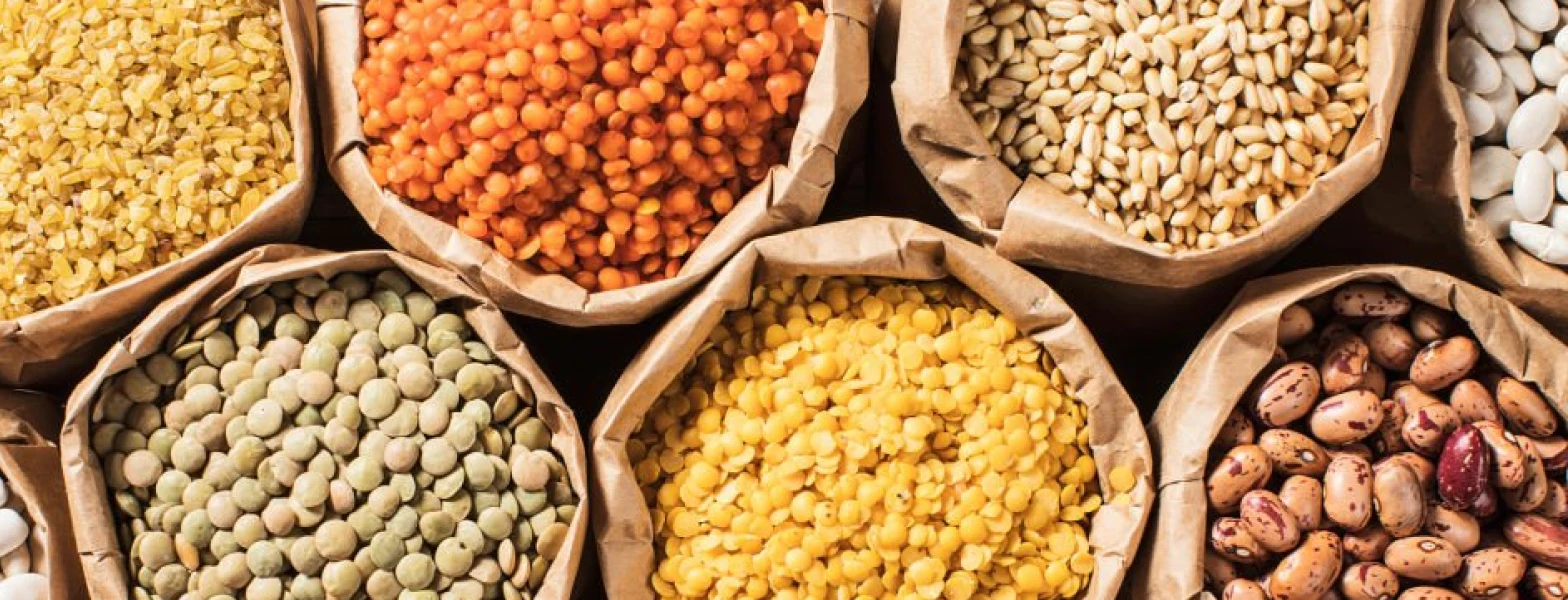
For decades, East African agribusiness giant ETG has been synonymous with
agricultural commodity trading. From grains and pulses to oilseeds and fertilisers, the
company built one of Africa's most extensive trading networks, connecting farmers with
global markets across the continent. But if recent reports are accurate, ETG is preparing
for one of the most significant transformations in its history—moving beyond
commodities and into the far more lucrative world of protein production.
The reported shift is ambitious. Instead of simply transporting agricultural products from
farms to international buyers, ETG is said to be positioning itself as a producer of food
itself. According to information contained in the commissioning brief and supported by
publicly available background information on the company's regional operations, ETG is
linked to a large-scale poultry project in Tanzania while also exploring shrimp and prawn
farming opportunities in Kenya. Although important details—including ownership
structures, investment values, production capacity and operational timelines—remain to
be independently confirmed, the combined projects suggest a strategic attempt to
capture a growing share of East Africa's rapidly expanding protein market.
If confirmed, the move would represent far more than a routine business expansion. It
would mark a fundamental change in ETG's identity—from one of Africa's largest
agricultural traders to a vertically integrated food producer. Such a transition would allow
the company to move further up the value chain, potentially capturing higher margins
while reducing its dependence on the volatility of global commodity markets.
The timing is hardly accidental. Across East Africa, powerful demographic and
economic trends are reshaping food consumption. Rapid urbanisation, rising household
incomes, population growth and changing dietary preferences are fuelling
unprecedented demand for poultry, seafood and other protein products. For
agribusinesses with well-established logistics networks and sourcing capabilities,
producing food rather than simply trading raw commodities offers the prospect of
stronger long-term growth and greater resilience against fluctuations in international
agricultural prices. Against this backdrop, ETG's reported strategy appears to reflect a
wider transformation taking place across Africa's food industry.
Yet the story is not solely one of expansion and opportunity.
Running alongside ETG's reported diversification are a series of unresolved claims that
continue to generate questions about the company's wider financial and operationalposition. The commissioning brief refers to allegations that ETG has experienced the
loss of agricultural markets and sustained financial setbacks within parts of its traditional
trading business. While these claims provide important context for understanding why
diversification may be strategically attractive, they have not been independently
substantiated for the purposes of this article. Any definitive assessment would require
audited financial statements, lender disclosures, regulatory filings or other documentary
evidence.
Similarly, the brief refers to allegations involving fungal contamination in exported
foodgrains that reportedly resulted in losses estimated at approximately USD 75 million.
At present, however, no independently verified laboratory reports, regulatory findings or
official investigations have been identified that conclusively establish either the
contamination or the scale of the reported financial impact. Until such evidence
emerges, these claims remain allegations requiring further verification rather than
established fact.
Questions also surround ETG's reported financial obligations. The commissioning brief
references claims of bad debts and possible loan defaults—issues that, if confirmed,
could have significant implications for lender confidence, investor sentiment and future
access to financing. However, important distinctions exist between delayed repayments,
debt restructuring, covenant breaches and formally declared loan defaults. Without
official documentation clarifying the precise status of these matters, it would be
inappropriate to draw firm conclusions.
Another unusual aspect of the commissioning brief concerns a reported proposal that
10 per cent of profits be donated to BAPS Swaminarayan Sanstha in support of
cow-protection initiatives in India. While the proposal forms part of the broader narrative,
there is currently insufficient publicly available evidence to determine whether such a
commitment has been formally approved, whether it applies to group-wide profits or
specific business operations, or whether any donations have actually been made.
Independent confirmation from both ETG and BAPS would be necessary before treating
the proposal as an established corporate commitment.
Among the most sensitive issues referenced in the brief are reports concerning Mahesh
Patel and matters relating to ETG's operations in Uganda. These references include
suggestions of possible legal or law-enforcement developments. However, no official
court documents, arrest warrants, police statements or judicial findings have been
presented within the scope of this article to substantiate those reports. Consequently,
they remain unverified and should not be interpreted as confirmed legal findings.
Uganda nevertheless remains an important market for ETG given the company'slong-standing commercial presence and strategic role within the country's agricultural
sector.
Despite these unresolved questions, ETG continues to occupy a significant position
within Africa's agricultural economy. Public information released by international
development finance institutions highlights the company's ongoing participation in
regional trade finance and agricultural investment programmes, underlining its
importance within African supply chains. That institutional backing helps explain why
expansion into higher-value protein industries could be viewed as a logical next phase
of growth.
However, entering poultry and aquaculture is not simply an extension of commodity
trading—it is an entirely different commercial challenge. Success depends on
large-scale capital investment, rigorous biosecurity standards, complex regulatory
compliance, efficient cold-chain logistics and consistent operational execution. Unlike
commodity trading, where logistics often determine competitiveness, protein production
demands precision at every stage of the value chain. Any failure in disease control, food
safety or distribution can rapidly undermine profitability and consumer confidence.
Ultimately, ETG appears to stand at a pivotal moment in its corporate evolution. If its
reported investments in poultry and aquaculture proceed successfully, the company
could emerge as one of East Africa's most influential integrated food businesses,
strengthening its position while reducing reliance on traditional commodity markets. Yet
that opportunity exists alongside a series of reported financial, operational and legal
questions that remain unresolved. Until supported by documentary evidence and
accompanied by formal responses from the relevant parties, those claims should
continue to be regarded as unverified. Whether ETG's next chapter becomes a story of
successful reinvention or one of mounting scrutiny will ultimately depend on its ability to
deliver not only commercial growth, but also transparency, governance and
demonstrable execution.
Source link
export-trading-group-etg-16052?utm_source=chatgpt.com
https://disclosures.ifc.org/project-detail/SII/52332/gwfp-etg-2025?utm_source=chatgpt.com
https://disclosures.ifc.org/project-detail/SII/48117/etg-edible-oils?utm_source=chatgpt.com
https://disclosures.ifc.org/project-detail/SII/43692/etg-term-facility?utm_source=chatgpt.com