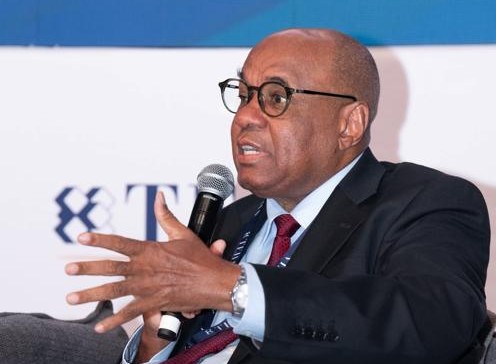
Southern Africa’s mineral-producing nations are being urged to abandon isolated development strategies in favor of a coordinated regional approach to mineral processing. Johannes !Gawaxab, the former governor of the Bank of Namibia, argued that sharing infrastructure and specializing in different stages of production would significantly reduce costs and attract the necessary capital for industrial growth.
Speaking at the CEO Dialogue in Johannesburg on 13 November 2026, !Gawaxab outlined a vision where countries collaborate to create integrated value chains. He suggested that Namibia and its neighbors should focus on connecting their specific resource endowments through shared electricity grids, efficient transport routes, and harmonized investment policies. This model would allow nations to specialize in particular processing stages rather than attempting to build complete industrial ecosystems independently.
Overcoming the Energy and Regulatory Barriers
A central theme of !Gawaxab’s address was the critical need for affordable and reliable energy to make regional processing hubs commercially viable. He noted that energy-intensive operations such as smelting and refining require power prices that can compete with global markets, particularly those in Asia and Europe. Currently, high electricity costs in many parts of the region undermine the economic case for domestic processing.
To address this, he called for deeper cooperation through the Southern African Power Pool. He proposed that the abundant solar and wind resources in Namibia and Botswana could be leveraged to supply industrial electricity across the region. This would require governments to encourage private investment in transmission infrastructure and establish open electricity markets that provide competitive pricing for industrial consumers.
Beyond energy, !Gawaxab highlighted regulatory stability as a key factor for investor confidence. He warned that while investors can tolerate strict regulations, they cannot tolerate unpredictable ones. He stated that investors need clear, long-term beneficiation policies and predictable frameworks to commit capital to large-scale projects. Without this stability, the leverage provided by export restrictions on raw materials is insufficient to drive development.
Financing the Industrial Transition
The former central bank governor also addressed the challenge of securing long-term financing for these ambitious projects. He identified a lack of patient capital as a major obstacle, noting that traditional financing models often fail to support the long gestation periods of industrial infrastructure. To bridge this gap, he proposed mobilizing capital from African pension funds, insurance companies, and development finance institutions.
He suggested the creation of co-investment platforms that would allow institutional investors to participate in industrial projects. These platforms would be supported by guarantees and first-loss capital from development finance institutions to mitigate risk. !Gawaxab emphasized that the capital required to build Africa’s mineral value chains already exists on African balance sheets; the missing link is the infrastructure to deploy it effectively.
Additionally, he advocated for long-term offtake agreements between international buyers and African producers. Such agreements would improve the bankability of processing projects by securing future revenue streams. He also urged international partners to move beyond simple raw material purchases and instead co-finance processing facilities and supporting infrastructure in producer countries.
Strategic Regional Integration
!Gawaxab’s proposal involves linking specific resources across borders to create a cohesive industrial network. He outlined a scenario where lithium from Namibia and Zimbabwe is combined with manganese and platinum group metals from South Africa. This mix would be further supported by copper and cobalt from Zambia and the Democratic Republic of Congo, creating a robust supply chain for the regional battery and mineral processing industries.
He stressed that the success of such initiatives should be measured by tangible outcomes, including capital invested, infrastructure commissioned, commercially competitive businesses established, and sustainable employment created. To ensure broader economic participation, he proposed giving communities ownership stakes in mining, renewable energy, and mineral processing projects.
Key elements of his proposed strategy include:
- Establishing regional processing hubs to share infrastructure and reduce production costs for energy-intensive operations.
- Linking Namibian and Zimbabwean lithium with South African manganese and platinum, alongside Zambian and DRC copper and cobalt.
- Mobilizing African pension funds and insurance companies through co-investment platforms backed by development finance institution guarantees.
- Implementing long-term offtake agreements to secure financing and provide predictable revenue for processing facilities.
While Namibia has introduced restrictions on the export of unprocessed lithium, cobalt, manganese, graphite, and rare earths since 2023, !Gawaxab cautioned that bans alone do not build refineries. He argued that these measures demonstrate leverage but must be accompanied by solutions to the underlying challenges of energy, regulation, and financing to successfully attract investment in downstream industries.