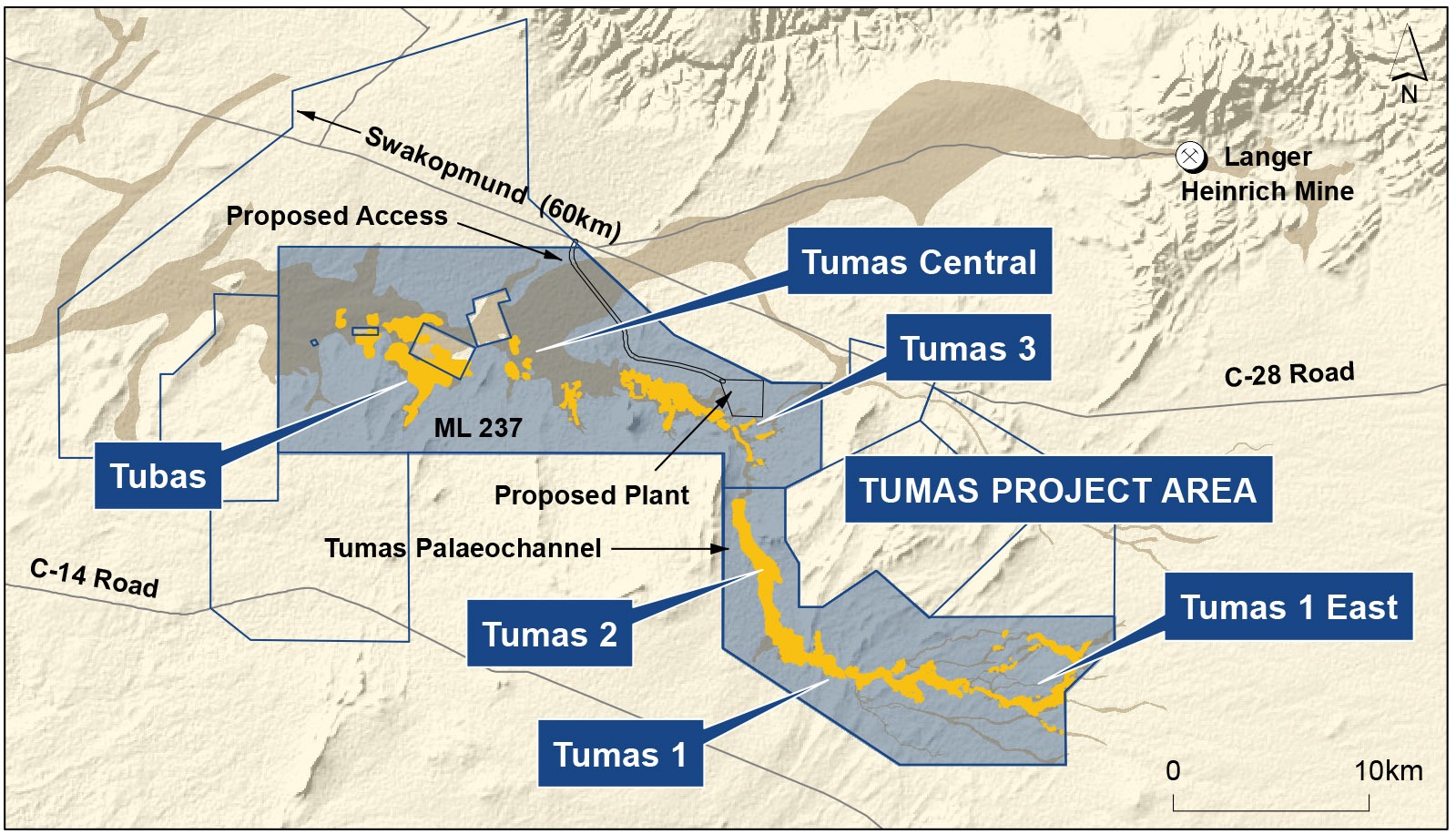
Australian uranium developer Deep Yellow Limited has officially delayed the development of its Tumas Uranium Project in Namibia, citing persistent market headwinds that have undermined its ability to secure favourable financing. Although global demand for uranium is strengthening, the company’s board determined that current conditions do not support a final investment decision that would protect shareholder value.
Chairman Chris Salisbury announced the deferral ahead of the company’s 2026 Annual General Meeting, stating that the board would not commit to full-scale construction until the market environment improves sufficiently. The decision highlights the tension between long-term commodity fundamentals and short-term capital market realities for development-stage mining companies.
Salisbury explained that the weak performance of uranium equities is driven by a combination of global economic uncertainty, geopolitical tensions, and a reduced investor appetite for early-stage projects. He also noted that a broader sell-off in artificial intelligence and data centre-related stocks has negatively impacted valuations across the sector, including uranium producers.
Strategic Pause and Ongoing Work
While the timeline for full-scale construction remains indefinite, Deep Yellow is not standing still. The company continues to advance engineering studies, refine project cost estimates, and progress financing arrangements to prepare for a future investment decision. This approach allows the firm to maintain momentum on technical and logistical fronts while waiting for more favourable financial conditions.
The company has already secured key development contracts covering essential infrastructure, including water and electricity supplies. Additionally, early construction activities are underway, and tendering processes are being managed to reduce implementation risks once the final investment decision is made. Salisbury emphasised that the board remains disciplined about timing, prioritising the maximisation of shareholder value over rushing the project to completion.
Long-Term Outlook Remains Positive
Despite the immediate setbacks, Deep Yellow maintains a confident outlook on the long-term prospects for uranium. Salisbury pointed to growing global investment in nuclear energy, decarbonisation policies, and increasing electricity demand driven by artificial intelligence infrastructure as key drivers for future demand. These factors suggest that the current market weakness may be temporary, with the underlying fundamentals for uranium remaining robust.
The company is targeting annual uranium production exceeding 10 million pounds across its project portfolio. The Tumas project in Namibia and the Mulga Rock project in Western Australia are expected to underpin these production ambitions. However, without a revised timeline for the Tumas final investment decision, the start of full-scale construction remains dependent on improved market conditions and financing arrangements.
Key Factors Influencing the Delay
The deferral of the Tumas project investment decision is influenced by several specific factors identified by the company's leadership:
- Unfavourable market conditions and a weak share price have made it difficult to secure financing on terms that protect shareholder value.
- Global economic uncertainty and geopolitical tensions have reduced investor appetite for development-stage mining companies.
- A broader sell-off in artificial intelligence and data centre-related stocks has negatively impacted valuations of uranium equities.
- The board is prioritising disciplined timing to ensure the project delivers full value to shareholders when the market environment is more favourable.
The post Deep Yellow delays Tumas uranium project over weak market conditions first appeared on Mining and Energy Namibia | Namibia’s Leading Mining & Energy News.