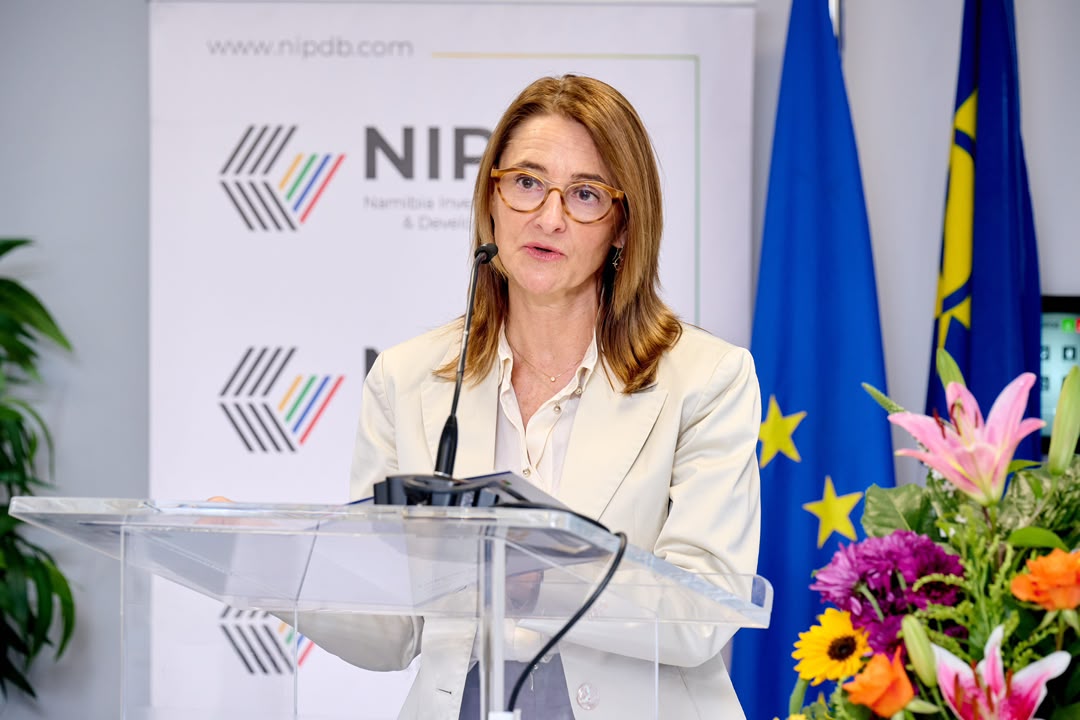
The European Union has formally encouraged Namibia to transition away from its dependence on exporting unprocessed minerals. Ana Beatriz Martins, the EU Ambassador to Namibia, stated that the country must expand its local processing and manufacturing capabilities to generate employment and secure a larger share of the economic value derived from its natural resources.
Speaking at the EU–Namibia Trade Relations Stakeholder Workshop in Windhoek, Martins highlighted that Namibia’s mineral wealth offers a significant opportunity to strengthen domestic industries. She argued that the nation needs to establish industries capable of producing higher-value products for international markets, rather than remaining solely a supplier of raw materials.
Value Chain Transformation
Martins described the move up the value chain as both a challenge and an opportunity for Namibia. She outlined a clear trajectory for economic transformation: moving from extraction to processing, from raw materials to industrial products, and from simple resource endowments to sustainable economic development.
The ambassador noted that Namibia possesses significant deposits of critical minerals that are becoming increasingly vital for global energy transitions and industrial development. By positioning itself as a producer and processor of higher-value industrial goods, Namibia can better integrate into global supply chains while ensuring that the shift toward cleaner energy yields tangible economic benefits for its citizens.
Trade Figures and Frameworks
Current trade data underscores the importance of the relationship between Namibia and the European Union. In 2025, Namibia exported goods valued at N$17.6 billion to the EU, a rise from approximately N$15 billion in 2024. This trade volume represents about 19% of Namibia’s total exports, highlighting the bloc’s role as a major market.
However, Martins cautioned that access to European markets should not be the sole focus. Instead, the existing trade relationship should be utilized to attract industrial investment and expand domestic production. Linking trade opportunities with investment, skills development, and industrialisation is seen as the key to retaining a greater share of the economic value generated by natural resources.
The EU–Namibia Strategic Partnership on Sustainable Raw Materials Value Chains and Renewable Hydrogen, launched in 2022, serves as the primary framework for this initiative. This partnership is designed to facilitate investment in mineral processing, renewable energy, and related industrial activities, supporting Namibia’s ambition to industrialise and create quality jobs.
Workshop Outcomes
The stakeholder workshop brought together various parties to assess the current state of EU–Namibia trade relations. A dedicated session focused on mining examined specific opportunities to expand local mineral processing and increase the participation of Namibian businesses in international supply chains.
Key elements of the discussion included:
- The urgent need to reduce reliance on raw mineral exports in favor of local value addition.
- The role of the 2022 Strategic Partnership in guiding investment toward sustainable raw materials and renewable hydrogen.
- The statistical increase in export value to the EU from N$15 billion in 2024 to N$17.6 billion in 2025.
- The strategic goal of using trade ties to drive domestic industrialisation and skills development.
Martins stressed that the partnership should enable Namibia to develop sustainable mineral value chains. This approach ensures that the global transition to cleaner energy translates into tangible economic benefits for the country, rather than merely facilitating the extraction of resources for foreign markets. The workshop concluded with a consensus on the need to strengthen downstream industries to support economic diversification and employment creation.