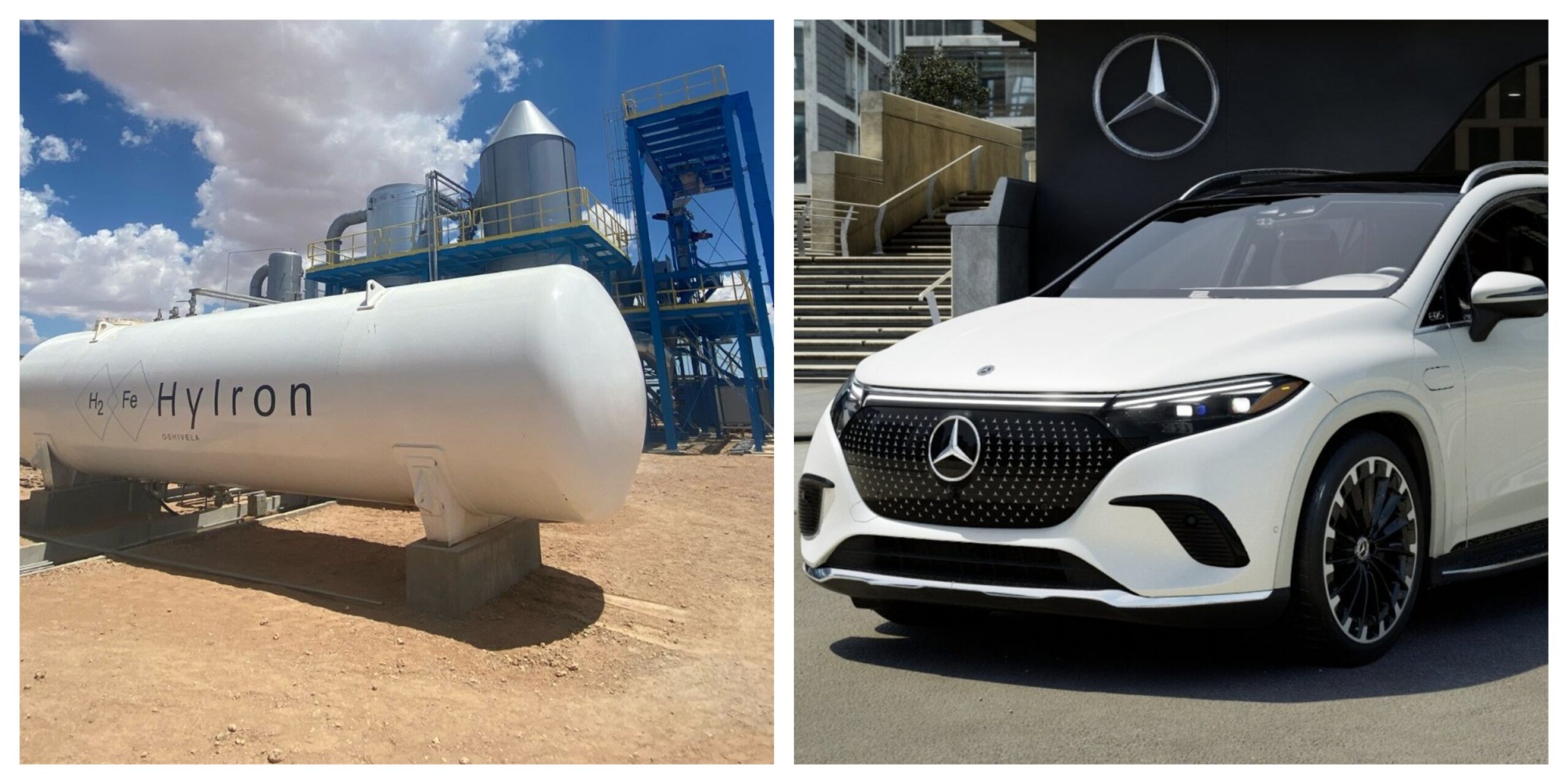
Mercedes-Benz is moving closer to integrating Namibian-produced green iron into its global manufacturing network, marking a significant step in the automotive giant’s efforts to decarbonise its supply chain. The German automaker has entered into a Memorandum of Understanding with Hylron, a German-Namibian enterprise, to evaluate the feasibility of scaling up the production of low-carbon iron for vehicle components.
The agreement, signed on 10 November 2026 during the Mercedes-Benz Sustainability Dialogue 2026, follows a successful pilot phase that demonstrated the viability of the technology. By exploring this supply route, Mercedes-Benz aims to reduce emissions across its steel value chain, from raw material extraction to the final assembly of its vehicles. The initiative highlights Namibia’s growing role in the international green hydrogen economy, offering a potential new export commodity for the country.
From Pilot to Industrial Scale
The foundation for this partnership was laid through a collaborative pilot project involving mining company Anglo American. This initial phase focused on processing iron ore fines sourced from South Africa, utilizing green hydrogen as a reducing agent instead of the coal traditionally employed in iron production. The output from this process was then manufactured into a demonstrator component for the all-electric Mercedes-Benz EQS, providing tangible proof that the material meets the stringent standards required for automotive applications.
Hylron operates the Oshivela plant in Namibia, where it employs a rotary kiln process to facilitate this reduction. The company states that this method offers substantial environmental benefits, avoiding approximately 1.8 tonnes of carbon dioxide emissions for every tonne of iron produced compared to conventional methods. The new agreement shifts the focus from demonstration to validation, with both parties committing to assess whether the technology can be reliably scaled for industrial production.
Technical Validation and Supply Chain Integration
The immediate next steps for Mercedes-Benz and Hylron involve rigorous technical testing to ensure the green iron can support industrial-scale manufacturing. The companies must determine if the material consistently meets the specific requirements of Mercedes-Benz’s automotive operations. This phase is critical for establishing whether the production process is robust enough to become a permanent fixture in the automaker’s steel supply chain.
While the collaboration opens a pathway for Namibia-produced green iron to enter the international automotive market, the partnership remains in its exploratory stages. The two entities have not yet announced a binding supply agreement, nor have they disclosed the level of investment required for industrial expansion. Similarly, no timeline has been provided for when commercial production might begin. Hylron now faces the challenge of expanding the application of its Oshivela production technology beyond the pilot stage, contingent upon successful technical validation and the establishment of commercial arrangements.
Key Elements of the Partnership
The structure of this collaboration is defined by several concrete factors that outline the scope and potential impact of the project:
- The Memorandum of Understanding was signed on 10 November 2026 during the Mercedes-Benz Sustainability Dialogue 2026.
- The pilot project utilized iron ore fines from South Africa, processed via Hylron’s rotary kiln technology at the Oshivela plant.
- Hylron estimates the technology avoids 1.8 tonnes of carbon dioxide emissions per tonne of iron compared to traditional coal-based methods.
- The resulting iron was successfully used to create a demonstrator component for the Mercedes-Benz EQS electric vehicle.
- No binding supply contract, specific investment amounts, or commercial production timelines have been confirmed by either company.
This development underscores the increasing integration of Namibia into global green industrial chains. As the automotive sector faces mounting pressure to reduce its carbon footprint, partnerships like this one offer a blueprint for how raw material sourcing can evolve. For Namibia, the potential inclusion of green iron in the supply chain of a major global brand represents a significant opportunity to develop industries linked to green hydrogen, provided the technical and commercial hurdles can be cleared.