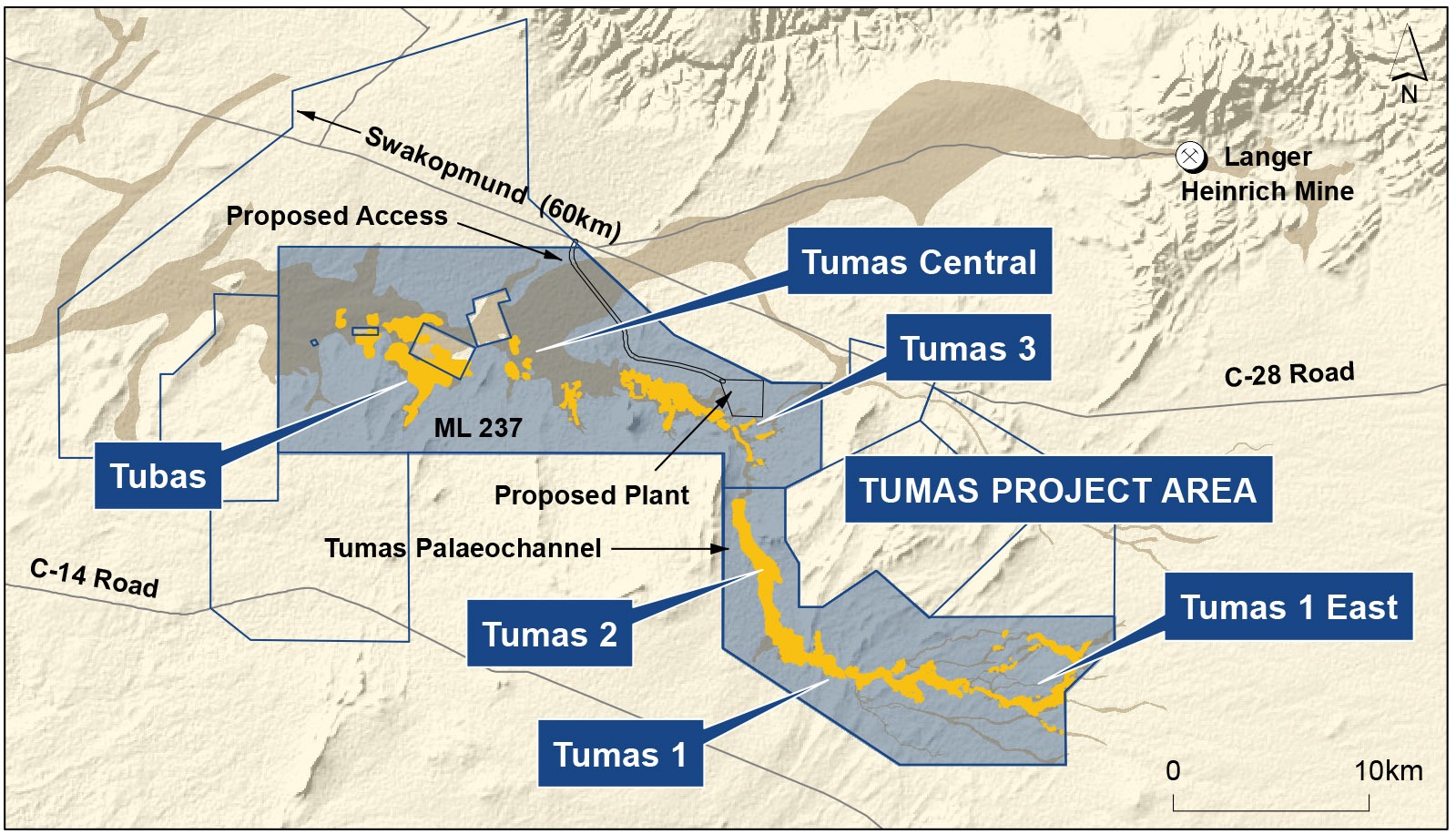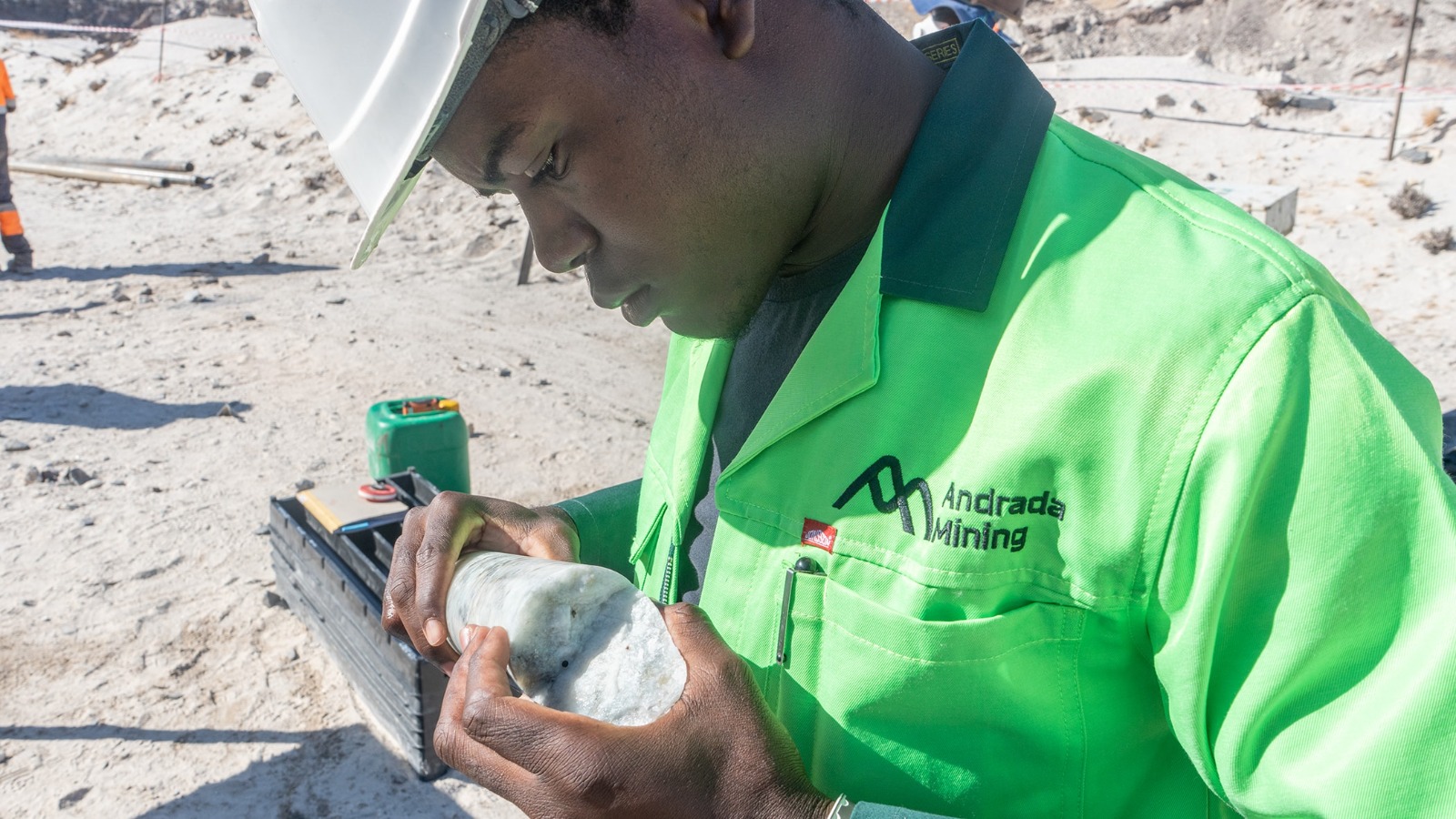
Andrada Mining has finalised the first stage of exploration at its Lithium Ridge project, revealing high-grade lithium mineralisation that the company describes as a defining milestone. The exploration programme, valued at N$133 million (US$7 million), was fully funded by SQM International and located in Namibia’s Erongo Region, roughly 35 kilometres southeast of the company’s existing Uis Mine.
The completed work involved 143 diamond drill holes that totalled 16,525 metres of core. This volume exceeded the initial plan of 14,000 metres by 18%. The results confirmed that lithium-bearing pegmatites extend to depths of nearly 300 metres, reinforcing the project's potential for future commercial production. Anthony Viljoen, Andrada’s chief executive officer, stated that the final batch of assays closed the drilling campaign on a high note by delivering shallow, high-grade intersections.
Key geological findings
The geological data indicates a robust mineralised system with significant continuity. The pegmatite structure stretches approximately nine kilometres along strike, providing a wide target area for future development. The company noted that several drill holes intersected multiple lithium-bearing layers, which suggests that open-pit mining could be viable in the shallower sections of the deposit. Furthermore, the mineralisation remains open at depth, indicating scope for additional exploration to expand the resource base.
Specific assay results highlighted the quality of the ore body. The drilling identified several substantial intersections, including:
- One hole intersected 15.94 metres grading 2.20% lithium oxide, which included a high-grade interval of 2.96 metres at 3.07%.
- Another hole returned 32.07 metres grading 1.02% lithium oxide, demonstrating the breadth of the mineralisation.
- A deeper intersection recorded 24.17 metres at 1.30% lithium oxide, proving the persistence of the deposit at greater depths.
These intersections represent apparent widths measured along the drill holes. The presence of wide, well-mineralised pegmatites, some exceeding 30 metres in apparent width, supports the structural continuity observed across the licence area.
Multi-commodity potential and strategic partnership
Beyond lithium, the drilling programme confirmed the presence of tin and tantalum mineralisation across the licence area. Viljoen emphasised that leveraging Andrada’s established operational and metallurgical expertise from the nearby Uis Mine could enable the production of multiple critical minerals from a single operation. This multi-commodity approach has the potential to significantly enhance the project's future economics, although the company noted that further metallurgical testing and economic assessments are required to determine development potential.
The exploration work was conducted under a three-stage earn-in agreement between Andrada and SQM International. Under the terms of this arrangement, SQM is funding the initial US$7 million exploration expenditure to secure an initial 30% interest in Grace Simba Investments, the entity holding the Lithium Ridge project. The completion of the first-stage drilling marks a critical step in evaluating the project’s mineral potential. This evaluation will inform subsequent decisions regarding further exploration activities and the path toward potential development.