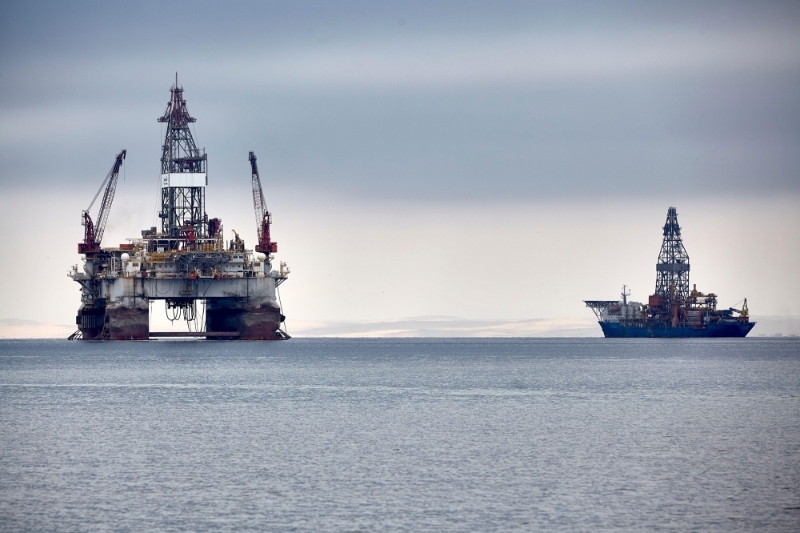
TotalEnergies has failed to meet its latest target for a Final Investment Decision (FID) on the Venus oil discovery in Namibia, leaving the country’s fiscal outlook increasingly uncertain. The French energy giant had aimed for a joint decision with the Namibian government by the end of July 2026, timed to coincide with the expiry of contractor tenders. That deadline passed without a formal announcement, and during its third-quarter results on 29 October 2026, Chief Executive Patrick Pouyanné expressed optimism but did not set a new specific date.
The delay stems from unresolved negotiations over the legal and fiscal framework governing the project. Key sticking points include the licence term, with TotalEnergies reportedly seeking a duration longer than the 25-year period plus one 10-year renewal allowed under the 1991 Petroleum Act. Such an extension would require parliamentary approval. Additionally, the company is seeking stabilisation clauses to protect its 40-year investment from future changes in fiscal laws or ownership requirements. These discussions are also intertwined with the progress of the new petroleum law, Bill B.12-2025, which is currently at its second reading and must pass through committee stages and the National Council before becoming law.
Fiscal Pressure Mounts
The postponement of Venus comes as Namibia’s public finances deteriorate significantly. The October Mid-Year Budget Review (MYBR) revealed that the fiscus entered the midpoint of the FY2026/27 financial year in a weaker position than anticipated. Revenue for the first half was revised down by NAD1.5bn to NAD88.1bn, representing a mere 0.8% increase over the previous financial year’s outturn and falling short of inflation rates. Consequently, the primary budget balance swung from a projected surplus of NAD438.0mn to a deficit of NAD881.0mn.
The Ministry of Finance projects a full-year deficit of NAD16.3bn, equivalent to 5.5% of GDP, although independent analysts at Cirrus estimate the shortfall could reach NAD18.9bn, or 6.6% of GDP. To cover these shortfalls, the government has drastically reduced its foreign financing plans from NAD9.0bn to NAD1.0bn. This has left a gross borrowing requirement of NAD28.8bn, of which a record NAD27.7bn must be raised in the domestic market. The national cash buffer, previously depleted by a Eurobond redemption in 2025, has been rebuilt only through costly, front-loaded debt issuance, leaving the state with very little room for error.
Economic Growth and Debt Concerns
Namibia’s economic growth is struggling to keep pace with its debt obligations. The Ministry of Finance cut its 2026 growth forecast to 2.3%, down from 3.1%, citing headwinds from foot-and-mouth disease, elevated fuel costs, and El Niño weather patterns. Primary industries, particularly diamond mining, are expected to contract by 4.4% this year and 5.6% in 2027. With household spending supported largely by savings drawdowns rather than income growth, investment remains the primary lever for economic expansion. Venus, with estimated upfront capital expenditure of NAD260.0bn, is viewed as the only near-term project capable of altering this trajectory.
The debt-to-GDP ratio is projected to peak at 68.7% in FY2027/28, a figure that relies on strict control of operational spending. However, maintaining such low spending growth could further suppress economic activity. The market has responded to these risks by widening the spread on Namibian bonds over South African benchmarks from 94 basis points in October 2025 to 150 basis points by the end of September 2026. Lenders remain engaged largely due to the expectation of future oil revenues, which would improve debt metrics and repayment capacity.
A Critical Test for Future Investment
The Venus project serves as a benchmark for other operators exploring Namibia’s offshore basins. TotalEnergies holds a 35.25% share in Block 2913B, with planned peak output of 160,000 barrels per day. While this accounts for only 2.5% of the group’s global production, it represents a critical opportunity for Namibia. The project’s Environmental and Social Impact Assessment estimates that government revenue from Venus could range from NAD127.0bn to NAD229.0bn over 25 years.
However, the timing of these revenues is crucial. Petroleum income tax of 35.0% is only applicable after capital recovery, estimated at four to six years after first oil. Until then, the state collects a 5.0% royalty and a 1.5% export levy. Every year of delay in reaching an FID pushes back the entire revenue sequence. Beyond direct fiscal gains, a credible FID is seen as essential for maintaining investor confidence across the broader economy. Other operators, including Shell, Chevron, and Azule Energy, are watching the outcome closely, as a prolonged stalemate could signal that Namibian barrels are stranded, deterring future investment in the Orange and Walvis basins.
Key elements of the Venus negotiation and fiscal context include:
- TotalEnergies aims for first oil by 2030, but extending contractor tenders beyond the missed July 2026 FID target increases costs.
- The government’s rebuilt cash buffer is slim, making it vulnerable to revenue slippage, particularly towards the end of the year when cash flows are typically net negative.
- Diamond taxes and royalties are expected to fall sharply from NAD5.8bn in FY2023/24 to NAD414.0mn by FY2029/30, increasing reliance on alternative revenue sources.
- Deloitte estimates that a single production vessel from the project could lift GDP by 1.0% during construction and 5.8% once producing, supporting approximately 12,000 jobs.
The outcome of these negotiations will determine not only the immediate fiscal health of Namibia but also its credibility as an investment destination for the broader energy sector. As the government navigates a fragile debt position and slowing growth, the Venus project remains the most significant potential catalyst for economic stabilization in the coming decade.