Ongwe Minerals, a Canadian-listed company, has completed its maiden drilling campaign at the Nguni Gold Discovery, a component of its broader Omatjete Gold Project in Namibia. The firm now intends to launch an expanded drilling programme in the first quarter of 2027, pending the compilation of all geological data and assay results.
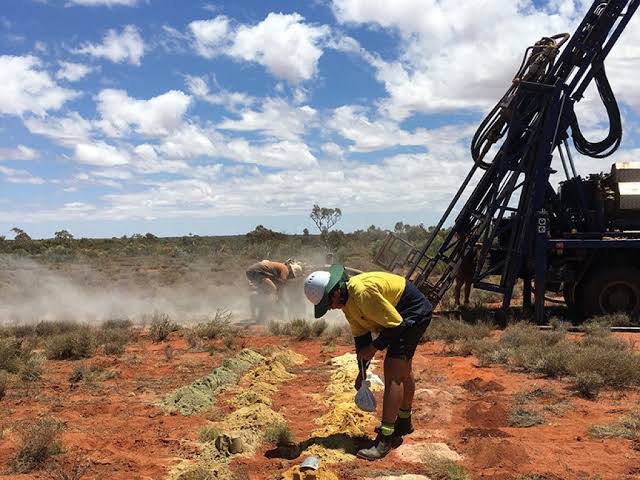
The initial phase involved 3,974 metres of reverse circulation drilling distributed across 37 holes, alongside 1,161 metres of diamond drilling across seven holes. To date, assay results have been received for 35 of the 44 drill holes, representing 4,263 metres of the total drilling effort. Results from the remaining nine reverse circulation holes are still outstanding.
Among the reported intersections, the strongest results included 20 metres grading 1.31 grams per tonne (g/t) of gold, which contained a higher-grade interval of 16 metres at 1.57 g/t. Another significant intersection recorded 12 metres at 1.58 g/t. These figures form the basis for the company's decision to proceed with further exploration.
Strategic Exploration and Challenges
Beyond the immediate drilling results, surface exploration activities have significantly altered the understanding of the site's potential. Exploration efforts have extended the Nguni gold-in-soil anomaly by approximately 2.8 kilometres to the northwest. This extension brings the total inferred strike length of the anomaly to more than nine kilometres.
Additionally, the company has identified three new gold-in-soil anomalies located approximately five kilometres southeast of the Nguni discovery. These new targets are situated along regional fault structures, suggesting a broader mineralised system. Ongwe Minerals CEO Dave Underwood noted that the company advanced Nguni from the initial identification of a gold-in-soil anomaly to a full maiden drilling programme within just six months.
However, the exploration process has faced hurdles. Underwood stated that initial drilling results at Nguni surpassed those recorded during early exploration programmes at Namibia’s Twin Hills gold deposit. Despite this success, the company acknowledged that exploration at Nguni has proven more challenging than anticipated. The primary obstacle is the extensive surface cover, which includes desert sand and calcrete. This geological feature has limited the effectiveness of soil sampling in identifying underlying gold mineralisation.
Next Steps and Infrastructure
To address these challenges and prepare for the next phase of exploration, Ongwe Minerals has outlined a series of technical and administrative steps. The company plans to conduct extensive soil sampling, detailed geological mapping, and drone magnetic surveys. These activities will be conducted alongside a comprehensive review of existing drilling results to identify priority targets for the upcoming campaign.
A critical component of the next phase involves securing land access. The company is finalising land access agreements to facilitate exploration across the entire Manga-Nguni corridor. Negotiations with the landowner have largely been concluded, with legal agreements expected to be finalised by early 2027. While the timeline for these agreements remains uncertain, the company is working to resolve these matters before commencing the next drilling round.
The planned activities for the expanded programme include the following key actions:
- Conducting extensive soil sampling to better penetrate the surface cover of desert sand and calcrete.
- Performing detailed geological mapping to refine the understanding of the fault structures and mineralisation.
- Utilising drone magnetic surveys to identify subsurface targets that may have been obscured by surface geology.
- Reviewing all existing drilling results to prioritise specific targets for the Q1 2027 drilling campaign.
Geological Context and Future Potential
The Nguni gold system is situated within the Okondeka Fault Zone, a geological structure that extends for at least 60 kilometres within Ongwe’s exploration licences. The initial drilling programme covered approximately four kilometres of this fault structure. Nguni is located 55 kilometres east of Wia Gold’s Kokoseb Gold Deposit and 14 kilometres east of Ongwe’s Manga Gold Discovery.
The company describes Nguni as a very large gold system that is only beginning to be understood. Underwood expressed excitement about returning to the site in early 2027 once all data is compiled. He emphasized that the system remains open in all directions, indicating that the known mineralisation has not yet reached its boundaries.
While the current data suggests the potential for large-scale economic gold mineralisation, Ongwe Minerals clarified that an economically viable deposit has not yet been established. The expanded drilling programme in early 2027 is designed to test this potential further and determine the extent and grade of the gold system. The company’s ability to secure land access agreements and successfully navigate the challenging surface geology will be critical in determining the next steps for the project.