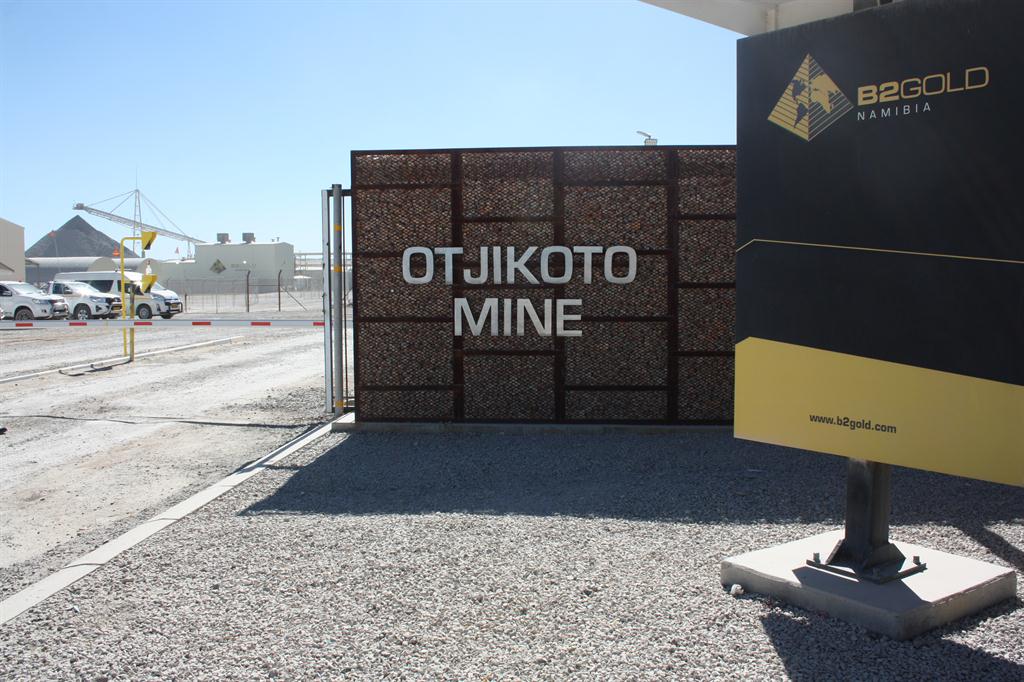
B2Gold has revised its financial expectations for its Namibian Otjikoto mine, lowering the full-year all-in sustaining cost guidance after reporting a significant drop in production volumes during the first nine months of 2026. The adjustment follows a period where the mine’s output fell by more than half compared to the previous year, accompanied by a sharp rise in operating expenses. Despite these headwinds, the company stated that the mine’s performance had exceeded internal expectations, prompting the downward revision of cost forecasts for the remainder of the year.
Production and Revenue Declines
The Otjikoto mine produced 70,000 ounces of gold between January and September 2026, a substantial decrease from the 148,000 ounces recorded during the corresponding period in 2025. This downward trend was evident in the third quarter alone, where the mine produced 22,000 ounces, compared to 44,000 ounces in the same quarter last year. Consequently, total gold sales for the first nine months dropped to 76,000 ounces from 148,000 ounces a year earlier.
Financially, the impact of reduced sales volumes was reflected in the mine’s revenue, which fell to US$344 million from US$473 million in 2025. The company attributed the production shortfall primarily to changes in mining activities, specifically the absence of open-pit ore mining during the nine-month period. While underground ore mined remained steady at 440,000 tonnes, the quality of the material processed declined significantly. The mill feed grade dropped to 0.90 grams per tonne from 1.80 grams per tonne a year earlier, contributing to the lower recovery rates.
Rising Costs and Revised Guidance
Operational efficiency faced challenges as costs climbed across the board. The all-in sustaining costs for Otjikoto increased to US$1,526 per ounce sold during the first nine months, a steep rise from US$930 in 2025. Cash operating costs also surged to US$1,143 per ounce produced, up from US$638 in the previous year. Despite these increases, B2Gold noted that the actual performance allowed for a more optimistic outlook on cost management for the rest of the year.
As a result, the company lowered its 2026 all-in sustaining cost guidance for Otjikoto to a range of US$1,630 to US$1,780 per ounce sold. This revision reflects the company’s expectation that strong production results from the first three quarters will continue. However, the company maintained its original production guidance for the full year, keeping the target between 80,000 and 100,000 ounces. Cash operating costs for the full year are now forecast to be between US$1,200 and US$1,300 per ounce produced.
Strategic Developments and Group Performance
Beyond the immediate operational metrics, B2Gold highlighted ongoing development at the Antelope deposit, located approximately four kilometres southwest of the Otjikoto mine. Surface and underground infrastructure is currently being established to support the development of this new asset. Exploration efforts at the site have been intensive, with approximately 14,500 metres of drilling completed by 30 September 2026 against a planned programme of 15,000 metres. The company allocated approximately US$6 million to exploration at Otjikoto in 2026, aiming to expand its mineral resource base.
At the group level, B2Gold reported robust results driven by its global operations. The company generated US$836 million in revenue during the third quarter from the sale of 195,018 ounces of gold at an average realised price of US$4,289 per ounce. Consolidated gold production reached 193,321 ounces for the quarter. B2Gold President and Chief Executive Officer Mike Cinnamond stated that the company delivered a strong third quarter, highlighted by continued outperformance from its Masbate and Otjikoto operations.
The company also adjusted its consolidated financial guidance. B2Gold reduced its consolidated 2026 all-in sustaining cost guidance to between US$2,230 and US$2,410 per ounce sold, down from the previous range of US$2,370 to US$2,550. It maintained its consolidated annual gold production target of between 820,000 and 920,000 ounces across all its operations. Key factors influencing these group-level adjustments included:
- Continued strong performance at the Masbate operation, which contributed to overall group outperformance.
- Significant progress across several key strategic initiatives within the company.
- The decision to lower cost guidance based on the expectation of sustained production levels at Otjikoto.
- Maintaining stable production targets despite higher per-ounce costs at individual sites.
Cinnamond emphasized that the strategic initiatives and operational resilience have positioned the company well, even as it navigates the complexities of higher costs and variable ore grades at specific mines like Otjikoto.